Commercial Roof Drainage Problems in St. Louis: Signs, Causes, and Solutions
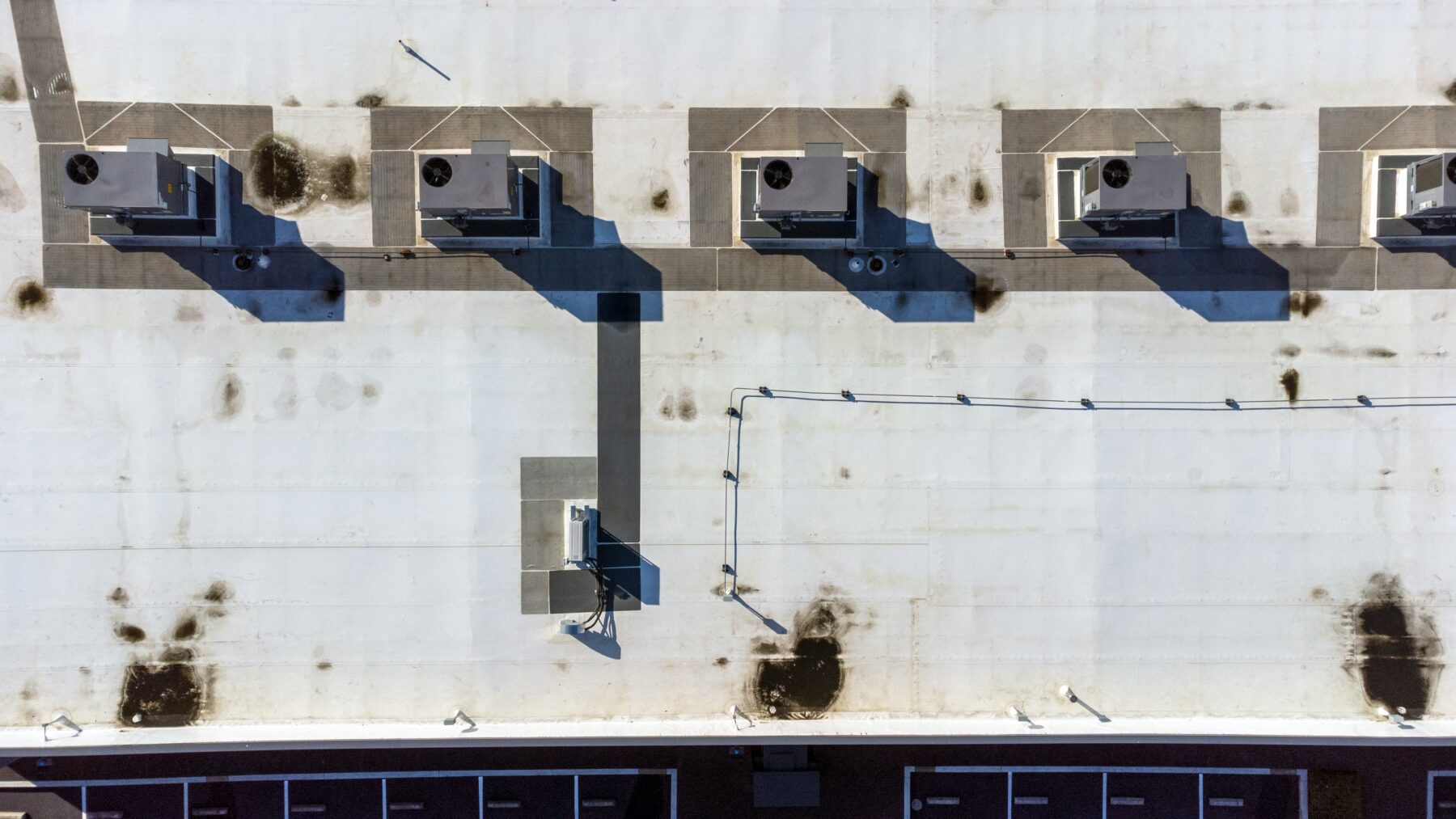
Summer is a very demanding season for commercial roofs in St. Louis. Rising temperatures, severe thunderstorms, and hail put Poor drainage is one of the most common causes of preventable commercial roof damage in St. Louis. When water cannot move off a flat or low-slope commercial roof quickly and completely, it creates a chain of structural, mechanical, and membrane problems that accelerate deterioration and lead to costly emergency repairs. This guide covers the most common drainage failures affecting St. Louis commercial buildings, how to identify them early, and what property managers and building owners should do to address them.
Call 314-436-3788 to schedule a commercial roof drainage assessment.
St. Louis commercial buildings face some of the most challenging drainage conditions in the Midwest. The region averages 42 inches of rainfall annually, with summer months delivering intense rain events, often 2 to 4 inches within a few hours, that overwhelm aging or improperly designed drainage systems. Combined with the region’s freeze-thaw cycles in winter, which shift and crack drain fittings, and July heat that warps low-slope membrane surfaces, St. Louis roofs demand well-functioning drainage to survive their full expected service life.
Why Commercial Roof Drainage Fails in St. Louis
Flat and low-slope commercial roofs are designed to drain, not to pool water. When they fail to do so efficiently, it is almost always due to one or more of these root causes.
- Clogged or debris-filled interior drains, scuppers, or downspouts that slow or block water movement
- Inadequate slope or pitch in the roof surface, causing water to pool in low-lying areas
- Structural deflection or sagging caused by aging roof decking or overloaded insulation
- Drain sumps that have shifted, cracked, or separated from the membrane over time
- Insufficient number of drainage points for the building’s roof surface area
- Rooftop equipment, HVAC curbs, or added structures that redirect water flow away from drains
Warning Signs of Commercial Roof Drainage Problems
Drainage problems rarely announce themselves dramatically. They develop gradually, showing subtle signs that facility managers and property owners often miss until significant damage has occurred. Early detection depends on knowing what to look for both on the roof surface and inside the building.
On the Roof Surface:
- Visible water pooling 48 or more hours after the last rainfall, particularly in field areas or near HVAC equipment
- Sediment or organic material deposits in a ring pattern, indicating where water dried after pooling
- Algae, moss, or vegetation growing on the membrane surface, especially near drains or parapet walls
- Debris accumulation, leaves, gravel, roofing granules, blocking drain strainers or scupper openings
- Visible sags, deflections, or uneven areas in the roof membrane indicating insulation compression or deck movement
Inside the Building:
- Water stains, discoloration, or dark spots on ceiling tiles, particularly after heavy summer rain events
- A musty or moldy odor in the building, especially in areas directly below flat roof sections
- Gurgling sounds in downspouts or interior drain lines after rainfall, indicating slow drainage or partial blockage
- Water overflowing from scuppers or downspouts during normal rain events rather than only in extreme storms
What Happens When Drainage Problems Go Unaddressed
Unresolved drainage issues create a compounding damage cycle that significantly reduces a commercial roof’s expected lifespan and drives repair costs into territory that makes earlier corrective action look inexpensive by comparison.
Membrane deterioration: Prolonged ponding breaks down the UV and chemical resistance of TPO, EPDM, and modified bitumen membranes, causing surface cracking, chalking, and accelerated seam separation. Manufacturers explicitly void warranties on roofs with known, unaddressed ponding conditions.
Insulation saturation: Water infiltrates through seams and minor punctures into the insulation layer, which loses its thermal R-value when wet. Saturated polyiso insulation also compresses under load, creating low spots that worsen ponding in a self-reinforcing cycle. Once insulation is saturated, it typically requires complete replacement as part of the re-roofing scope.
Structural deck damage: Steel roof decking that is chronically exposed to moisture from above will rust and lose structural integrity over time. Wood decking will rot, warp, and lose fastener-holding strength. Deck repairs or replacement represent the most expensive component of any re-roofing project and are directly preventable through functional drainage.
Mold and interior air quality: Moisture-saturated insulation and decking create ideal conditions for mold growth, which can infiltrate HVAC systems and compromise indoor air quality for building occupants. Mold remediation is expensive and, in commercial buildings, often triggers OSHA or health department involvement.
Solutions for Commercial Roof Drainage Problems in St. Louis
The right solution for a drainage problem depends on its root cause, which is why a professional drainage evaluation should always precede any repair work. Addressing symptoms without identifying the underlying cause will not prevent recurring damage.
Drain cleaning and maintenance: For clogged or slow drains, professional cleaning of interior drain bowls, leader heads, downspout systems, and scuppers is often the first corrective step. Biannual cleaning, spring and fall, is standard practice for most commercial buildings in St. Louis to prevent debris accumulation from seasonal leaf drop and summer storm debris.
Tapered insulation installation: For roofs with insufficient slope, tapered insulation panels can be installed over the existing deck to create a positive drainage pitch toward drains and scuppers. Tapered insulation is most cost-effectively incorporated during a full roof replacement but can also be added as part of a targeted drainage improvement project.
Additional drain installation: Buildings where roof surface area has expanded or where original drain placement was inadequate may require additional interior drains or emergency overflow scuppers to handle peak rainfall volumes. Overflow drains and/or scuppers are also required by building code in many jurisdictions to prevent catastrophic structural loading in clogged-drain scenarios.
Drain sump repair and collar replacement: Drain collars and clamping rings that have separated from the membrane surface are a common point of water infiltration even when drains are not clogged. Proper re-integration of the drain sump into the membrane system with compatible flashing materials is a targeted repair that prevents significant interior water damage.
Proactive Drainage Maintenance: What St. Louis Building Owners Should Do Each Year
Most drainage-related commercial roof failures are preventable with a consistent maintenance schedule. The following annual tasks protect drainage performance and prevent the compounding damage cycle described above.
- Spring inspection and drain cleaning: Clear all drain strainers, scupper openings, and downspout screens after winter, before heavy spring rains arrive. Inspect drain collars and clamping rings for movement or separation from the winter freeze-thaw cycle.
- Summer monitoring: After major storms in June, July, and August, walk accessible roof areas within 48 hours to document any areas where water is not draining properly. July’s heat makes surface conditions most visible.
- Fall cleaning: Clear leaf and debris accumulation from drains and scuppers before fall rains and ahead of winter snowmelt.
- Annual professional inspection: Have a qualified commercial roofing contractor inspect drain system components, membrane condition at all drain locations, and overall slope performance. Document conditions with photographs for warranty compliance and insurance records.
Commercial Roof Drainage Services in St. Louis
St. Louis Roofing Co. has served commercial building owners across Missouri and Illinois since 1848. Our union-trained crews carry manufacturer certifications from Elevate, Carlisle, Johns Manville, Versico, Kemper and Siplast, and our Women’s Business Enterprise status makes us a trusted partner for properties of all sizes.
This summer, our team is available for commercial roof drainage evaluations, drain cleaning and repair, ponding water assessments, tapered insulation consultations, and full commercial roof inspections throughout St. Louis County, St. Charles County, Jefferson County, and Metro East Illinois.
Call us to schedule your commercial roof drainage evaluation:
Missouri: 314-436-3788
Illinois: 618-337-9061