Commercial Roof Due Diligence in St. Louis: The Inspection Buyers and Sellers Can’t Skip
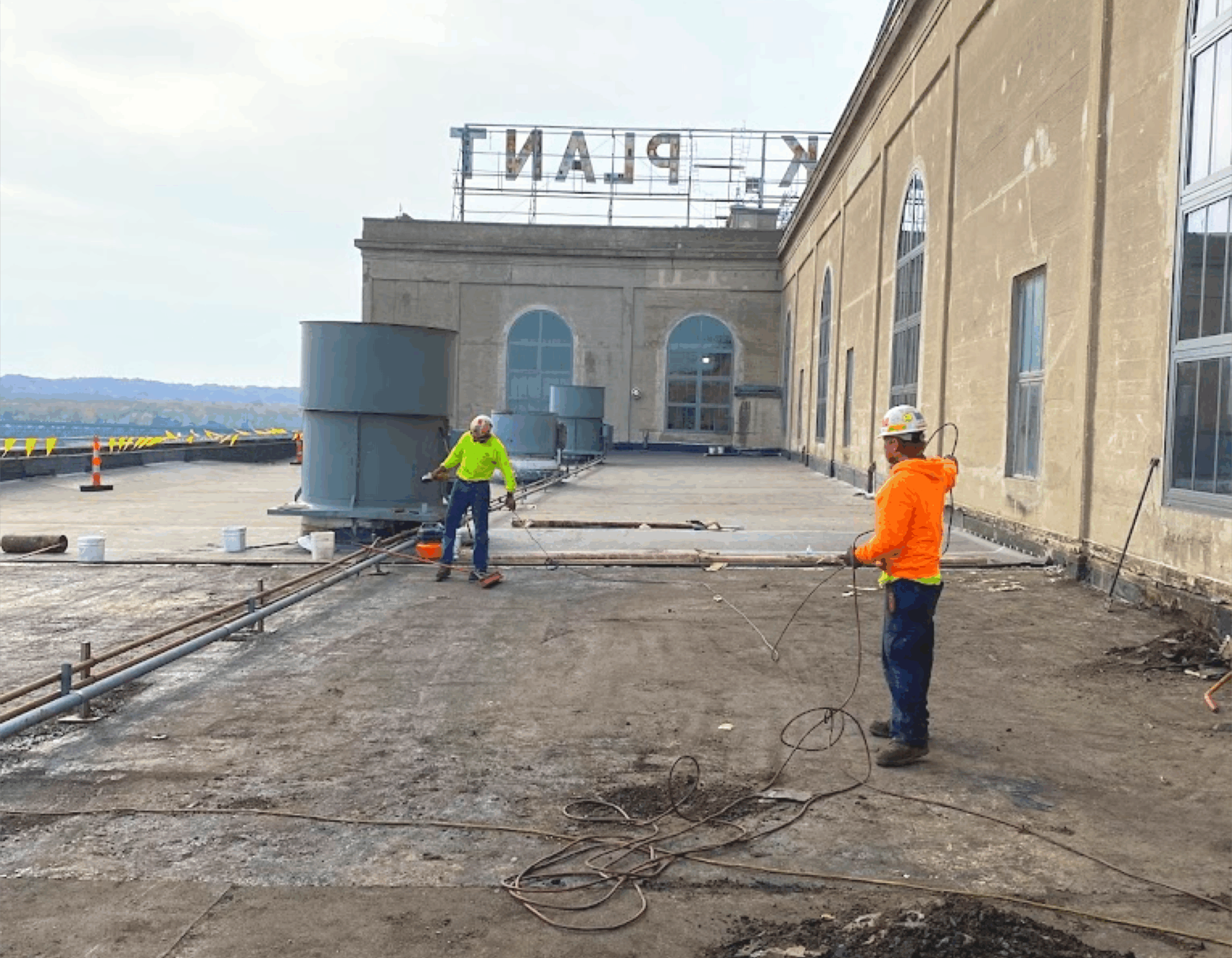
Before you close on a commercial building in St. Louis, the roof is one of the largest hidden liabilities on the property, and one of the easiest to misjudge. A commercial roof due diligence inspection is a transaction-focused evaluation that documents the roof’s condition, estimates its remaining useful life, confirms whether the manufacturer warranty can transfer to the new owner, and quantifies the capital cost the buyer will inherit. In the St. Louis metro, where freeze-thaw cycles, hail, and deferred maintenance on aging building stock are common, a roof that looks fine from the parking lot can carry a six-figure replacement liability that neither party priced into the deal.
Call 314-436-3788 (MO) or 618-337-9061 (IL) to schedule a commercial roof due diligence assessment.
This guide is written for the people on both sides of a commercial real estate transaction in Missouri and Illinois: buyers and investors performing due diligence, sellers preparing a building for market, and the property managers, brokers, and lenders who advise them.
What Is a Commercial Roof Due Diligence Inspection?
A commercial roof due diligence inspection is a roof evaluation performed specifically to inform a real estate transaction, refinancing, or capital plan. Unlike a routine maintenance inspection, its purpose is to answer the questions a buyer, seller, or lender needs answered before money changes hands: How much service life is left? What will it cost to repair or replace? Can the existing warranty be transferred? And are there hidden problems that a visual walk-through would miss?
In most commercial acquisitions and refinancings, the roof is evaluated as one component of a broader Property Condition Assessment (PCA). PCAs are commonly governed by the industry-standard framework ASTM E2018, which defines the minimum scope, documentation, and evaluator qualifications lenders expect. Within that framework, each major building system, including the roof, is reviewed for condition, maintenance history, and estimated remaining useful life. For most financed transactions, a PCA is not optional; it is a lender requirement, and the roof is often the single most consequential line item in it.
A dedicated roof due diligence inspection goes deeper on the roof itself than a general PCA typically does, which is why buyers of roof-critical properties, such as warehouses, distribution centers, and manufacturing facilities, often commission one specifically.
Why Does the Roof Deserve Its Own Due Diligence?
The roof is frequently the most expensive building system to replace and the easiest to misread. A commercial roof can hide problems that never show themselves during a casual walk-through, and those problems routinely carry five- and six-figure price tags.
Three realities make the roof uniquely risky in a transaction:
- Damage is often invisible. Hail bruising on TPO and EPDM membranes, saturated insulation beneath an intact surface, and early seam failures are rarely visible from the ground or even from a quick rooftop glance. They require moisture scanning or core sampling to detect.
- Deferred maintenance is common and expensive. Sellers preparing to exit a building often stop investing in the roof years before listing. Widespread patchwork repairs are a warning sign that full replacement is near, not evidence that the roof has been cared for.
- The cost lands on the buyer. A roof at the end of its life becomes the new owner’s capital problem within a few years of closing. Pricing that into the deal, or negotiating a credit, depends entirely on knowing the roof’s real condition before closing.
In the St. Louis market specifically, the region’s 80 to 100 annual freeze-thaw cycles, frequent severe hail, and summer rooftop temperatures that can exceed 150°F all accelerate roof aging. A roof’s chronological age tells only part of the story here; two identical roofs installed the same year can be in dramatically different condition depending on maintenance and storm exposure.
What Does a Commercial Roof Due Diligence Inspection Include?
A thorough transaction inspection covers far more than a surface walk. A proper due diligence assessment should include:
- Full membrane and field evaluation of the entire roof surface, seams, and terminations.
- Flashing, penetration, and curb inspection at every wall, parapet, drain, HVAC unit, skylight, and pipe.
- Drainage assessment, including drains, scuppers, downspouts, and evidence of ponding water.
- Moisture detection, using infrared scanning and/or core sampling to reveal saturated insulation that is invisible on the surface.
- Documentation review of the roof’s age, installation records, prior repairs, and maintenance history.
- Warranty status verification, confirming whether an active manufacturer warranty exists and whether it can transfer.
- A written report with date-stamped photos, a condition rating, an estimate of remaining useful life, and a projected capital cost for repair or replacement.
That final report is the deliverable that matters. It is what a buyer uses to negotiate, what a seller uses to defend their asking price, and what a lender uses to size reserves. The most useful reports translate roof condition into dollars and a timeline, not just a pass/fail verdict.
How Do You Estimate a Commercial Roof’s Remaining Useful Life?
Remaining useful life (RUL) is the estimated number of years a roof can be expected to perform before it requires replacement, and it is the number buyers and lenders care about most. Estimating it accurately requires more than reading the install date.
A qualified evaluator weighs several factors together:
- Roof age relative to system type. Most single-ply systems (TPO, PVC, EPDM) and built-up roofs last 20 to 30 years in the Midwest; modified bitumen typically 15 to 25 years. A 10-year-old roof may still have substantial life, but only if it has been maintained.
- Maintenance history. Without maintenance records, even a newer roof is a gamble. Documented inspections and repairs materially extend expected life; their absence shortens the credible estimate.
- Moisture in the insulation. This is the single most important finding. Once insulation is saturated, it loses its R-value and must be removed during re-roofing, which pushes a repair scenario toward full replacement. Infrared scanning and core sampling are the only reliable ways to detect it.
- Storm and hail exposure. In St. Louis, a roof that has absorbed multiple severe hail events may have a shorter functional life than its age suggests, even with no active leaks.
An honest RUL estimate gives a range, not a single number, and states the assumptions behind it. Any evaluator who promises exact precision without core sampling or moisture scanning is guessing.
Can a Commercial Roof Warranty Transfer to the New Owner?
Often yes, but only if the transfer is handled correctly and on time, and this is one of the most overlooked items in a commercial transaction. A transferable manufacturer warranty, particularly a No Dollar Limit (NDL) warranty, can be worth hundreds of thousands of dollars to a buyer, but it does not transfer automatically at closing.
Key points buyers and sellers should understand:
- Most transfers require a manufacturer inspection first, and the manufacturer typically requires any identified deficiencies to be repaired before the warranty will transfer.
- There is usually a transfer fee. Depending on the manufacturer and warranty type, fees commonly range from roughly $500 to $2,500, and some manufacturers allow only a single lifetime transfer.
- The window is tight. Many manufacturers require the transfer to be completed within about 30 days of closing. Miss the window, and the coverage can be lost permanently.
- Certified contractors matter. Manufacturer warranties generally remain valid only when factory-certified contractors performed the original installation and continue to service the roof.
Because every manufacturer, including Carlisle, Johns Manville, Versico, Siplast, Elevate and others, uses different forms, fees, and timelines, warranty transfer should be identified early in due diligence, not discovered after closing. St. Louis Roofing Co. is factory-certified by multiple leading manufacturers and can verify warranty status and coordinate the transfer inspection as part of a due diligence assessment.
What Should Sellers Do to Prepare a Roof for Sale?
Sellers who get ahead of the roof question protect their asking price and avoid last-minute deal friction. A buyer’s inspector will find roof problems; the only question is whether the seller finds them first. Proactive steps include:
- Commission a pre-listing roof assessment so there are no surprises during the buyer’s due diligence.
- Gather and organize all installation records, warranty documents, and maintenance history; documented care supports a higher, more defensible valuation.
- Address minor deficiencies (open seams, failed sealants, clogged drains) before listing, since small repairs are far cheaper than the price concessions buyers demand when they discover them.
- Confirm whether the manufacturer warranty is transferable and what the buyer will need to do to preserve it, which is a selling point worth advertising.
Repair, Replace, or Negotiate a Credit? Making the Call
Once the inspection is complete, the transaction decision usually comes down to how the roof’s condition is priced into the deal.
| Roof condition finding | Typical transaction outcome |
|---|---|
| Newer roof, maintained, dry insulation, warranty transferable | Roof is a non-issue; verify and transfer the warranty |
| Mid-life roof, minor deficiencies, no moisture | Negotiate repairs or a modest credit; plan maintenance |
| Aging roof, isolated moisture, patch history | Price replacement into the deal or negotiate a credit |
| End-of-life roof, widespread saturation, no warranty | Full replacement is imminent; negotiate a significant credit or replacement contingency |
The most common and costly mistake is treating an end-of-life roof as if a coating or targeted repair will solve it. Coatings and repairs work on roofs with remaining life and dry insulation; applying them to a saturated, failing roof masks the problem temporarily while the underlying system continues to fail, and the new owner inherits the full replacement anyway.
Why St. Louis Buyers and Sellers Work With St. Louis Roofing Co.
St. Louis Roofing Co. has served commercial building owners across Missouri and Illinois since 1848. Our union-trained, self-performing crews carry manufacturer certifications from Elevate, Carlisle, Johns Manville, Versico, Kemper, and Siplast and makes us a trusted partner for properties of all sizes.
For a real estate transaction, we provide a due diligence roof assessment that includes infrared moisture scanning and drone documentation as needed, a remaining-useful-life estimate, warranty transfer verification, and a written condition report with a projected capital cost you can take straight into negotiation. We deliver the report with no obligation and no high-pressure sales tactics; you receive documentation you can use whether or not you ever hire us for the work.
We serve commercial properties throughout St. Louis County, St. Charles County, Jefferson County, Madison County, and Metro East Illinois.
Schedule your commercial roof due diligence assessment: Missouri 314-436-3788 | Illinois 618-337-9061 | saintlouisroofing.com
Frequently Asked Questions
How much does a commercial roof due diligence inspection cost in St. Louis? St. Louis Roofing Co. provides commercial roof assessments for property owners, buyers, and sellers. A due diligence inspection includes membrane and flashing evaluation, drainage review, moisture detection, warranty verification, and a written condition report with a remaining-useful-life estimate and projected capital cost. Independent inspection firms and building enclosure consultants may charge between roughly $500 and $5,000 depending on roof size, complexity, and whether infrared moisture scanning is included.
How long does a due diligence roof inspection take? A field inspection of a typical mid-size commercial roof takes one to four hours, with additional time for infrared scanning or core sampling if moisture is suspected. The written report is generally delivered within a few business days, which fits within most transaction due diligence periods.
Is a roof inspection required to get financing on a commercial building? For most financed commercial acquisitions and refinancings, lenders require a Property Condition Assessment, commonly following the ASTM E2018 standard, and the roof is a core component of that assessment. Roof age, condition, and remaining useful life directly affect the reserves a lender requires and, in some cases, whether the loan closes at all.
Does a manufacturer roof warranty automatically transfer when I buy the building? No. Manufacturer warranties, including NDL warranties, generally do not transfer automatically. Most require a manufacturer inspection, completion of any required repairs, a transfer fee (often around $500 to $2,500), and completion within roughly 30 days of closing. Some manufacturers allow only one transfer. Confirm warranty status early in due diligence.
Should the buyer or the seller pay for the roof inspection? Either party can commission it, and in practice both benefit. Sellers who order a pre-listing assessment control the narrative and defend their price; buyers who order their own inspection get independent documentation for negotiation. It is common for each side to inspect, and the findings then inform repair credits or price adjustments.
Can hidden roof damage really affect a commercial property’s value? Yes, significantly. Saturated insulation, hail micro-fracturing, and deck deterioration are often invisible on the surface but can represent a six-figure replacement liability. Identifying these conditions before closing is what allows a buyer to negotiate a credit or a seller to address issues proactively rather than absorbing a surprise concession at the table.