How to Prepare Your Commercial Roof for St. Louis Summer
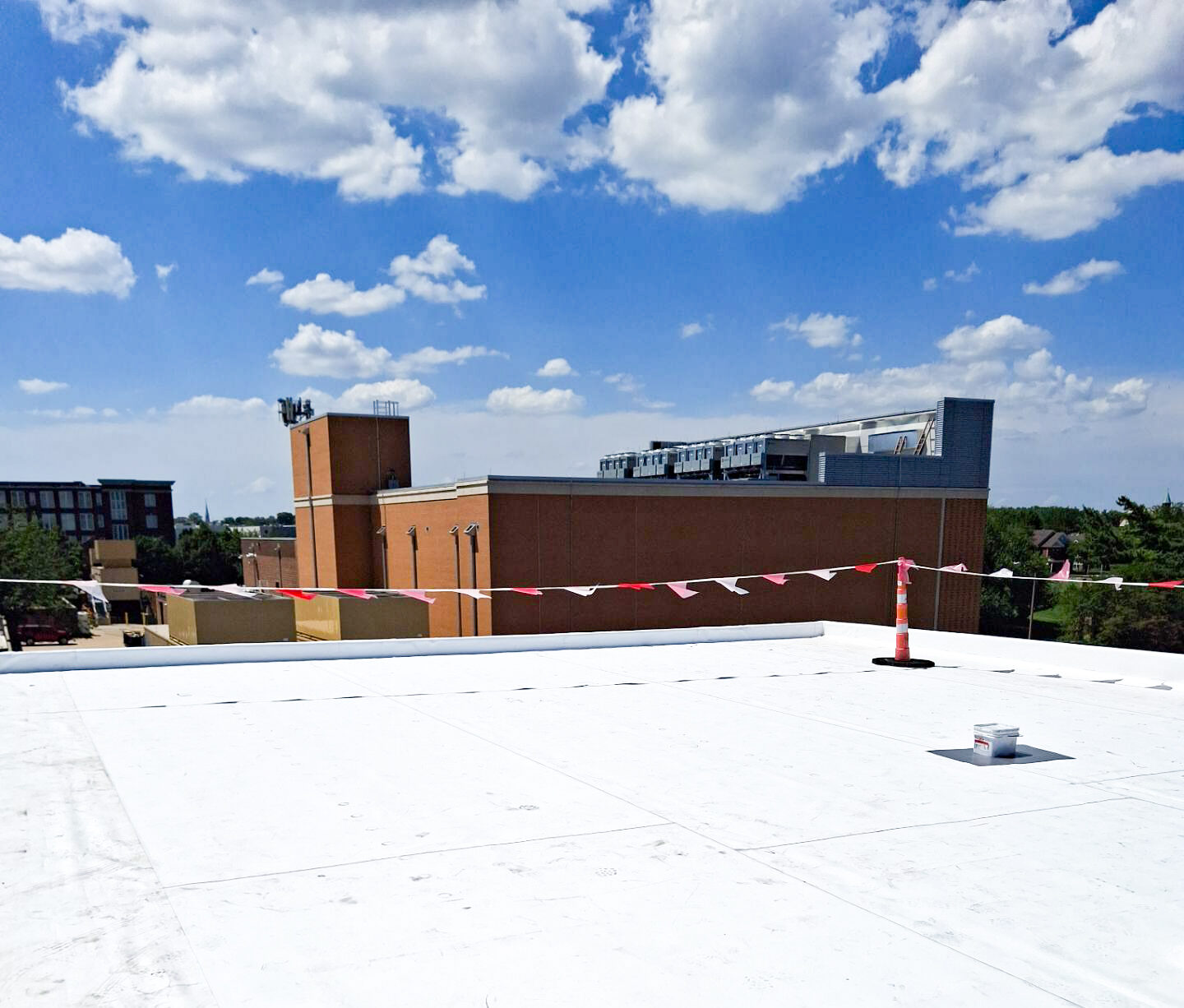
Summer is a very demanding season for commercial roofs in St. Louis. Rising temperatures, severe thunderstorms, and hail put flat and low-slope roofing systems under significant stress. Proactive preparation in June protects your investment and prevents costly emergency repairs during peak operating months.
Why Summer Is a Critical Season for St. Louis Commercial Roofs
St. Louis creates uniquely harsh summer conditions for commercial roofs. Key risks include:
- Summer temperatures regularly exceed 95°F and rooftop temps on dark membranes can reach 170°F
- Thermal expansion causes seams, flashing, and penetration details to weaken over time
- The region averages 40-50 severe thunderstorm days annually between May and September
- Hail, wind gusts over 55 mph, and rainfall exceeding 3 inches per hour are common
These conditions demand proactive attention before the season begins, not after damage occurs.
Schedule a Pre-Summer Roof Inspection in June
Schedule a professional roof inspection in June before summer heat and storm activity peak. A thorough inspection should cover:
- Current membrane condition and surface integrity
- Drainage performance (interior drains, scuppers, and gutters)
- Flashing condition at all transitions, walls, curbs, and penetrations
- HVAC equipment, pipes, vent pipes, and skylight surrounds
- Standing water or ponding from spring rains
Inspections in June also create documented pre-storm baselines — critical for supporting insurance claims if summer hail or storm damage occurs. Book early: roofing contractors fill up fast during peak season.
How St. Louis Heat Affects Commercial Roofing Systems
Different roofing systems respond to St. Louis summer heat in specific ways:
- TPO and PVC (single-ply): UV exposure causes chalking and reduced reflectivity over time. Systems 10+ years old may lose reflectance, increasing cooling costs in ways that mimic HVAC problems.
- EPDM (black membrane): Absorbs significantly more solar energy. Rooftop temps can reach 150-180°F, accelerating thermal movement at seams and flashings.
- Modified bitumen and built-up roofing: Prolonged heat waves can soften the surface course, causing granule loss and reduced UV protection.
- All systems: Degraded or compressed insulation from past moisture infiltration increases heat transfer into the building interior, raising cooling costs.
Hail and Storm Damage: What St. Louis Commercial Property Managers Need to Know
Missouri and Southern Illinois rank among the most hail-prone regions in the U.S. The St. Louis metro experiences multiple severe hail events most years. Key facts for commercial property owners:
- Hail damage on TPO and EPDM is often invisible to the naked eye. It creates micro-fractures that allow moisture infiltration over time
- On modified bitumen systems, hail can dislodge granules, exposing the asphalt to accelerated UV degradation
- Most commercial insurance policies require damage to be filed within 12 months of a storm; some require claims within 60 days
- Damage not documented and reported within that window may not be covered
After any hail event, schedule a certified damage assessment immediately. St. Louis Roofing Co. provides storm damage assessments with photo documentation, moisture probe testing, and written reports suitable for insurance submission.
Choosing the Right Time to Schedule Commercial Roofing Work in Summer
Summer scheduling matters. Here’s what to know:
- June and early July are the optimal months for planned commercial roofing projects because contractor availability is better before the peak storm-response period
- Hot-applied roofing systems have temperature installation limits; extreme heat can affect adhesive curing times and membrane weld quality
- For major projects (new installation, full replacement, or restoration), start contractor selection in June to secure project start dates before August and September backlog builds
- Single-ply systems like EPDM, TPO and PVC can generally be installed throughout summer with proper scheduling
- Emergency repairs can be completed any time conditions allow safe access
Cool Roofing Options for St. Louis Commercial Buildings
Cool roofing systems reduce rooftop surface temperatures by as much as 50-80°F compared to conventional dark-surface membranes. Key options for St. Louis commercial buildings:
- TPO and PVC membranes: White and light-colored TPO and PVC roofing systems are designed to reflect a significant portion of the sun’s heat and often meet ENERGY STAR® and Cool Roof Rating Council (CRRC) criteria for solar reflectance and thermal performance. These reflective roofing systems can help lower roof surface temperatures and improve building energy efficiency.
- Reflective coatings on existing EPDM or modified bitumen: Improve thermal performance without a full replacement, provided the existing system has remaining service life and adequate insulation
Practical benefits include reduced peak cooling demand, lower electricity costs, less thermal stress on roofing materials, and enhanced energy efficiency that may support sustainability and energy-management goals.
Frequently Asked Questions
How do I know if my St. Louis commercial roof needs inspection before summer?
Schedule an inspection if your roof hasn’t been professionally assessed in the past 12 months, or if you’ve noticed any of these warning signs: interior water stains, visible membrane blistering or cracking, drainage issues after rain, ponding water after spring storms, or hail events in the past year. Hail-related micro-fractures may not cause active leaks until summer heat cycles stress the membrane.
What is the most dangerous summer weather risk for a St. Louis commercial roof?
Hail is the most damaging single weather event for commercial roofing in the St. Louis area. The metro region experiences some of the highest annual hail frequency in the Midwest, with stones as small as 1 inch capable of creating micro-fractures in TPO and EPDM membranes that lead to moisture infiltration. Sustained high temperatures above 95°F are also a major risk factor, as rooftop temperatures can reach 170°F on older dark-surface membranes, accelerating seam and flashing degradation.
How much does a commercial roof inspection cost in St. Louis?
St. Louis Roofing Co. provides free commercial roof assessments for property owners and managers. A professional inspection typically includes membrane condition review, drainage assessment, flashing inspection, penetration checks, and a written condition report with photo documentation. Independent inspection companies may charge between $500 and $2500 depending on roof size and complexity.
Can I schedule commercial roofing work during summer in St. Louis?
Yes, but timing matters. June and early July are the optimal months for scheduled commercial roofing projects in St. Louis because contractor availability is better before the peak mid-to-late summer storm response period. Hot-applied roofing systems have temperature installation limits, but single-ply systems like EPDM, TPO and PVC can typically be installed throughout summer with proper scheduling. Emergency repairs can be completed any time conditions allow safe access.
Commercial Roofing Services Available in St. Louis This Summer
St. Louis Roofing Co. has served commercial building owners across Missouri and Illinois since 1848. Our union-trained crews carry manufacturer certifications from Elevate, Carlisle, Johns Manville, Versico, Kemper and Siplast, and our Women’s Business Enterprise status makes us a trusted partner for properties of all sizes.
This summer, our team is available for pre-season roof inspections, post-storm damage assessments, commercial roof repairs, and full system replacements throughout St. Louis County, St. Charles County, Jefferson County, and Metro East Illinois.
Call us to schedule your commercial roof evaluation:
Missouri: 314-436-3788
Illinois: 618-337-9061