The Complete Guide to Commercial Roof Preventative Maintenance in St. Louis (2026)
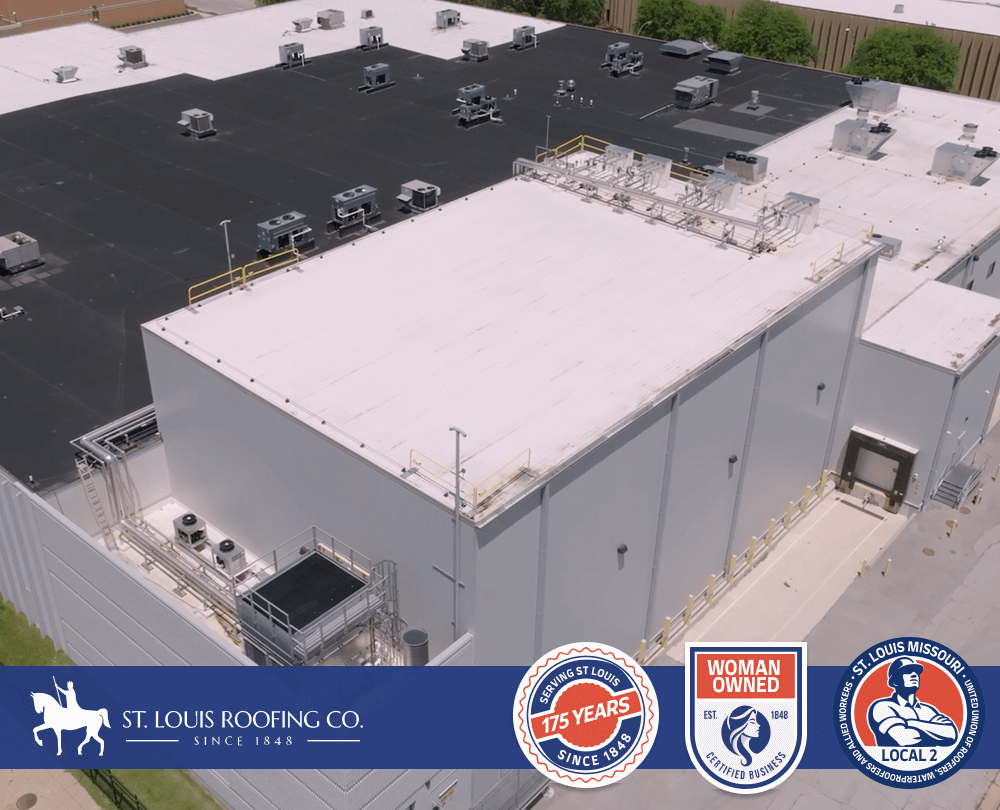
Commercial roof preventative maintenance is a scheduled, recurring service that includes biannual inspections, minor repairs, debris removal, drain and gutter cleaning, and documentation designed to extend roof lifespan, maintain the roof warranty and protect the insurability of the building. For St. Louis commercial properties, preventative maintenance typically costs $0.05 to $0.25 per square foot annually and extends roof service life by 30 to 50 percent. A 50,000 square foot building investing $5,000 to $10,000 per year in preventative care can defer a $400,000+ replacement by 7 to 12 years, delivering one of the highest returns on investment available in commercial property management.
Call 314-436-3788 to schedule a free preventative maintenance assessment.
If you manage a commercial property in the St. Louis metro area, your roof represents one of the largest assets on your balance sheet and one of the most underserved. Industry research consistently shows that commercial roofs without active preventative maintenance reach failure 30 to 50 percent earlier than properly maintained roofs, often forcing replacement at 12 to 15 years instead of 25 to 30. The financial gap between those two outcomes, on a typical mid-sized commercial building, runs into hundreds of thousands of dollars.
This guide walks facility managers, property managers, building owners, and commercial real estate investors through everything you need to know about preventative roof maintenance in the St. Louis market: what it includes, what it costs, what it prevents, and how to choose the right approach for your property.
What Is Commercial Roof Preventative Maintenance?
Commercial roof preventative maintenance is a scheduled, recurring service relationship between a building owner and a qualified commercial roofing contractor. Unlike one-off repair calls or annual inspections, true preventative maintenance combines proactive inspection, minor repairs, documentation, and emergency response priority into a single coordinated service delivered on a recurring schedule.
Properly structured preventative maintenance includes:
Biannual Comprehensive Inspections. Typically scheduled in spring (after freeze-thaw season) and fall (before winter loading), these inspections evaluate the entire roof system including membrane condition, seams, flashings, penetrations, drainage, and HVAC curb integrity.
Written Inspection Reports with Photo Documentation. Each visit produces a detailed report with date-stamped photos, drainage assessments, and prioritized recommendations. This documentation is critical for insurance compliance, warranty preservation, and capital planning.
Preventative Repairs. Minor repair work performed during inspections, such as resealing flashings, repairing small membrane damage, replacing failed sealants at penetrations, and addressing seam separations before they become leaks.
Debris Removal and Drain Clearing. Regular removal of leaves, branches, trash, and other debris from the roof surface, along with cleaning all drains, scuppers, and gutters to ensure proper water flow.
Why Preventative Maintenance Matters More in St. Louis
The St. Louis market is unusually demanding on commercial roofing systems for several reasons that make preventative maintenance particularly valuable here.
The freeze-thaw cycle is the most punishing climate factor for commercial flat roofs. St. Louis typically experiences 80 to 100 freeze-thaw cycles per year, where temperatures cross the freezing threshold within a 24-hour period. Each cycle causes roofing membranes, seams, and flashings to expand and contract, gradually creating micro-cracks and seam separations that become leak entry points.
Hail and severe weather exposure compounds the problem. The St. Louis metro sits inside one of the most hail-active corridors in the United States, averaging 3 to 5 severe hail events per year. Commercial flat roofs sustain hail damage differently than residential roofs: instead of obvious shingle bruising, hail damage on TPO, EPDM, and modified bitumen membranes often appears as subsurface fracturing that does not leak immediately but dramatically shortens roof life.
Heat and UV degradation add another layer of stress. Summer rooftop temperatures in St. Louis routinely exceed 150°F on dark single-ply membranes, accelerating polymer breakdown, drying out sealants, and stressing seams.
Combine these factors with the realities of commercial use (rooftop HVAC service traffic, satellite installations, plumbing modifications, and roof-mounted equipment additions), and an unmaintained commercial roof in St. Louis typically loses 30 to 50 percent of its rated service life.
The Real Cost of Skipping Preventative Maintenance
Commercial property owners often defer roof maintenance because it feels like an optional expense. The math says otherwise.
Consider a typical 50,000 square foot commercial property in the St. Louis area with a TPO roof installed in 2015:
The Cost of Maintenance Strategy Over 25 Years
A side-by-side look at how a maintenance plan impacts roof lifespan and total cost of ownership.
| Scenario | Annual Maintenance Investment | Roof Lifespan | Replacement Year | 25-Year Total Cost |
|---|---|---|---|---|
| No preventative maintenance | $0 | 12–15 years | 2027–2030 | $850,000–$1,100,000 (two replacements) |
| Reactive repairs only | $2,000–$4,000 | 15–18 years | 2030–2033 | $700,000–$900,000 |
| Full preventative maintenance Recommended | $5,000–$10,000 | 25–30 years | 2040–2045 | $475,000–$600,000 (one replacement) |
Across a 25-year ownership horizon, a properly maintained commercial roof can cost $250,000 to $500,000 less than an unmaintained roof, even after factoring in the cost of preventative maintenance itself. The savings come from three sources: deferred replacement cost (the largest factor), avoided emergency repairs, and prevented interior damage and potential loss of use from leaks. For a business, the cost of loss of use could be staggering.
That last factor is often the most painful in real-world scenarios. A single commercial roof leak that damages tenant property, disrupts business operations, ruins inventory, or causes mold remediation can cost $25,000 to $250,000+ on its own, frequently exceeding the cost of decades of preventative care.
How Preventative Maintenance Protects Your Insurance Coverage
Commercial insurance carriers in 2026 have significantly tightened roof underwriting after several years of severe weather losses. Many Missouri and Illinois commercial carriers now require:
- Documented inspections at minimum annual frequency, often biannual
- Written inspection reports retained for the life of the policy
- Evidence of timely repair of identified deficiencies
- Roof age and condition disclosure at renewal
Without this documentation, claims after major hail or wind events face significantly higher denial rates. The most common denial reason is not the storm itself but the carrier’s argument that pre-existing damage or “wear and tear” caused the loss, an argument that becomes nearly impossible to refute without inspection records showing the roof was in good condition before the event. In the last year, insurance carriers have begun to cancel property policies on buildings with roofs over 15 years old.
Active preventative maintenance with proper documentation effectively serves as ongoing legal evidence that the building owner has met their duty to maintain the property, dramatically improving claim outcomes.
How Preventative Maintenance Preserves Manufacturer Warranties
Most commercial roofing manufacturer warranties include explicit maintenance and inspection requirements. Common warranty conditions include:
- Annual or biannual inspection by a qualified contractor
- Maintenance of cleaning, sealants, drains and scuppers
- Prompt repair of cuts, tears, damage from foot traffic, equipment installation, or weather
- Notification to the manufacturer of any modifications or repairs
- Retention of inspection and repair records
- Maintenance must be completed by one of the roofing manufacturer’s certified applicators for the warranty to stay intact
Failure to meet these conditions can void some or all of the warranty. On NDL (No Dollar Limit) warranties, which can carry replacement values of hundreds of thousands of dollars, even a small lapse in documentation can become a six-figure problem at claim time.
A properly executed preventative maintenance schedule automatically satisfies these conditions and produces the documentation manufacturers require.
How to Choose the Right Preventative Maintenance Approach for Your Property
Selecting the right preventative maintenance approach comes down to four factors:
1. Roof Age and Condition. Newer roofs in good condition can typically use Basic-tier service. Mid-life roofs benefit most from Standard service. Older roofs nearing replacement should consider Premium service that can postpone capital expenditure.
2. Building Use and Risk Profile. Buildings with high-value tenants, sensitive operations, or significant interior assets justify higher-tier service. Simple warehouses with low interior value can often use Basic service.
3. Insurance and Warranty Requirements. Review your insurance policy and any active manufacturer warranties to understand the minimum inspection and documentation frequency required. Build the maintenance schedule to meet or exceed those requirements.
4. Contractor Capability. Preventative maintenance is only as valuable as the contractor delivering it. Look for documented manufacturer certifications, dedicated commercial service crews (not residential crews moonlighting on commercial work), digital reporting platforms, and a track record with St. Louis commercial properties. Hiring a local contractor with a good, long-standing reputation is also a very important consideration.
Why St. Louis Commercial Property Owners Choose St. Louis Roofing
Our preventative maintenance services are built specifically for the St. Louis market, with employee crews (not subcontractors) dedicated to commercial work and digital documentation systems that produce the records your insurance carrier and warranty manufacturer actually require. We are factory-certified by most major commercial roofing manufacturers and serve commercial properties throughout St. Louis, St. Charles, Madison, and Jefferson counties on both sides of the Mississippi River.
Every preventative maintenance relationship begins with a free comprehensive assessment of your existing roof, including drone documentation as necessary, drainage analysis, R-Value (insulation) analysis and a written condition report you can use even if you choose not to enroll in ongoing service. We believe maintenance relationships should be earned with quality service, not locked in with multi-year commitments and difficult cancellation terms.
Frequently Asked Questions
How often should a commercial roof be inspected in St. Louis?
Most commercial roofs in the St. Louis market should be inspected at minimum twice per year, ideally in spring after freeze-thaw season and fall before winter loading. Insurance carriers in 2026 increasingly require biannual documented inspections to maintain policy compliance, and most manufacturer warranties require annual inspections at minimum. Properties with older roofs (15+ years), high tenant traffic, frequent rooftop equipment service, or recent severe weather exposure may benefit from quarterly inspections.
Will preventative maintenance really extend my roof’s lifespan?
Yes, significantly. Industry data consistently shows that commercial roofs under active preventative maintenance achieve 30 to 50 percent longer service life than unmaintained roofs. A TPO or EPDM roof that would last 15 to 18 years without maintenance can routinely reach 25 to 30 years with proper care. The mechanisms are straightforward: small issues are caught and repaired before they cause membrane damage, drainage stays clear so water does not pond and degrade the membrane, and seams and flashings are resealed before they fail.
Can I do commercial roof maintenance myself or with my facility staff?
Limited maintenance can be performed by trained facility staff, including debris removal, drain clearing, and visual checks for obvious damage. However, true preventative maintenance requires specialized knowledge of single-ply welding, sealant systems, flashing techniques, and manufacturer warranty requirements. Improper repairs by untrained personnel are one of the most common causes of warranty voiding in commercial roofing. We recommend a hybrid approach: trained facility staff handle basic housekeeping and emergency tarping, while a qualified commercial roofing contractor handles all repair and inspection work.
What happens during a commercial roof inspection?
A comprehensive commercial roof inspection includes a full walk of the roof surface, evaluation of all seams and field membrane, examination of every flashing and penetration, inspection of all drains and scuppers, check of HVAC curbs and equipment supports, evaluation of parapet walls and coping, and documentation of any damage or deterioration. The inspector should produce a written report with date-stamped photos, prioritized recommendations, and a condition rating you can use for capital planning. A thorough inspection on a typical 50,000 square foot building takes 2 to 4 hours.
Are preventative maintenance costs tax deductible?
In most cases, commercial roof preventative maintenance costs are deductible as ordinary business expenses in the year incurred, since they preserve rather than improve the property. This is generally more favorable tax treatment than capital improvements, which must be depreciated. However, larger repairs identified during maintenance may have different tax treatment depending on their scope and effect on the asset. We recommend confirming the specific tax treatment of your maintenance expenses with your CPA, particularly for larger repair work uncovered during routine inspections.
Schedule Your Free Commercial Roof Assessment
Whether your roof is brand new and you want to protect your warranty, mid-life and you want to maximize remaining service life, or older and you need to defer replacement as long as possible, properly executed preventative maintenance is one of the highest-ROI investments available in commercial property management.
We offer free comprehensive roof assessments throughout the St. Louis metro and Metro East with no obligation and no high-pressure sales tactics. You will receive a written condition report, drone documentation, and a transparent preventative maintenance proposal that you can compare against any other contractor in the market.
Call 314-436-3788 or Request a Free Commercial Roof Assessment Online